If AI Can Navigate Mars, It Can Handle Your Monday Morning Roster Crisis
How the same technology driving NASA's rovers can transform scheduling chaos for Australian businesses.
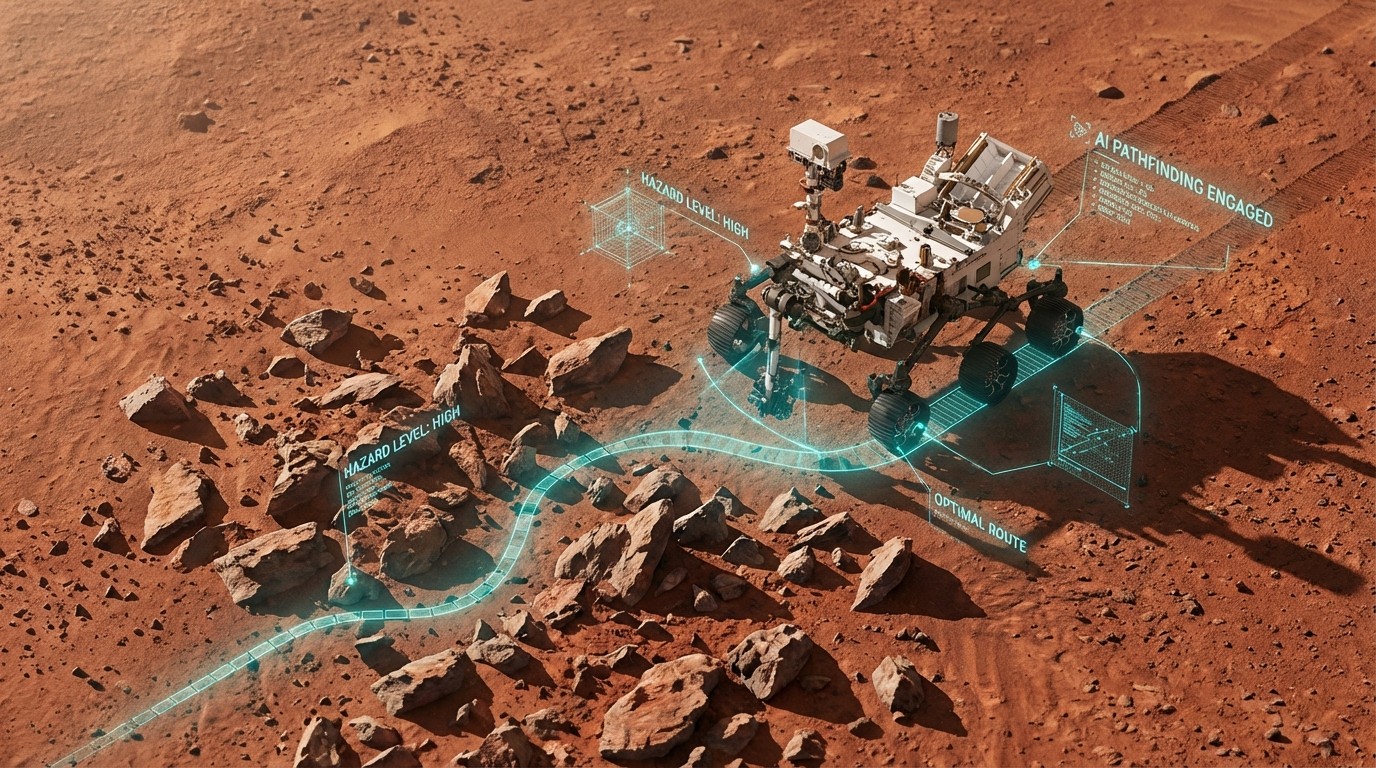
Last December, something remarkable happened 362 million kilometres away. NASA's Perseverance rover drove 400 metres across the Martian surface—guided not by human operators at mission control, but by Claude, an AI system developed by Anthropic.
Think about that for a moment. An artificial intelligence analysed images of an alien landscape, plotted waypoints through a field of rocks, and wrote the commands that safely navigated a billion-dollar rover on another planet.
Now here's the question we've been asking ourselves at AI2Easy: if AI can handle route optimisation on Mars, what's stopping it from solving that rostering nightmare keeping you up at night?
The 20-Minute Problem (and Why It Matters to You)
Here's what makes Mars navigation so tricky: signals take about 20 minutes to travel between Earth and Mars. By the time operators see what's happening, the rover has already moved on. There's no real-time control, just planning, trust, and adaptation.
Sound familiar?
If you're running a trades business, a healthcare facility, or any service operation with mobile teams, you face your own version of this challenge every day. By the time you've reworked the roster because Dave called in sick, three other things have changed. The customer who needed an urgent callout can't wait for you to shuffle your spreadsheet.
The difference? You don't have 20 minutes. You need answers now.
What NASA Figured Out (That Most Australian Businesses Haven't)
The JPL engineers who worked on this project discovered that Claude could cut their route-planning time in half. But more importantly, it made their drives more consistent. Less time on tedious manual work meant more time for what actually matters: collecting data, doing analysis, advancing the mission.
At AI2Easy, we've been helping Australian businesses discover the same thing for over a decade. The technology that helps navigate Martian terrain can help you navigate:
Reactive scheduling chaos — When someone's sick or a job runs long, AI can instantly recalculate the best redistribution of work across your team, factoring in skills, locations, customer priorities, and fatigue management.
Rostering complexity — Stop spending Sunday nights in spreadsheets. AI can generate optimised rosters that balance employee preferences, award requirements, skill coverage, and cost efficiency—then adapt them in real-time when reality intervenes.
Route optimisation — Your techs shouldn't be zigzagging across Sydney. AI can sequence jobs to minimise drive time, maximise billable hours, and still accommodate that urgent callout that just came in.
This Isn't Science Fiction. It's Just Good Business.
Here's what struck us about the NASA story: Claude didn't replace the rover operators. It worked alongside them. The AI handled the tedious waypoint calculations while the humans focused on the decisions that actually needed human judgment—like adjusting for ground conditions the satellite images couldn't show.
That's exactly how AI should work in your business.
Your operations manager shouldn't be spending hours manually shuffling names around a roster grid. That's the kind of repetitive, rules-based work AI excels at. Your people should be handling the exceptions, talking to customers, making the calls that require relationship knowledge and business judgment.
What This Looks Like in Practice
Imagine it's 6 AM. Three of your electricians have called in sick. You've got 18 jobs booked across metropolitan Sydney.
The old way: Two hours of phone calls, spreadsheet gymnastics, and increasingly unhappy customers as appointments get pushed.
The AI way: Within minutes, the system has reoptimised your entire day. Jobs are redistributed based on remaining technicians' locations, certifications, and scheduled finish times. Customers with flexible timing have been automatically offered alternative slots. The urgent jobs are covered. Your manager gets a summary of what changed and why.
This isn't hypothetical. This technology exists today. NASA just proved it works on Mars. The only question is when Australian businesses will catch up.
The Real Opportunity
The Perseverance rover has driven over 32 kilometres on Mars. Every single metre required careful planning, risk assessment, and resource optimisation—the same fundamental challenges you face every week.
NASA invested in AI because they understood something important: their people's time and expertise were too valuable to spend on tasks a machine could do better. The mission was too important for anything less than the best tools available.
Your business deserves the same thinking.
At AI2Easy, we've spent over a decade helping Australian businesses—from electrical contractors to plumbing companies to healthcare providers—find the right technology solutions for their operational challenges. We've seen firsthand how AI can transform the daily grind of scheduling and rostering from a constant headache into a genuine competitive advantage.
The same intelligence that's helping humanity explore other worlds is ready to help you run a smoother operation right here on Earth. The only question is: are you ready to let it?
AI2Easy has been matching technology solutions to business challenges since 2014. If you're spending more time managing spreadsheets than managing your business, let's talk about what's possible.
Reference : https://www.anthropic.com/features/claude-on-mars